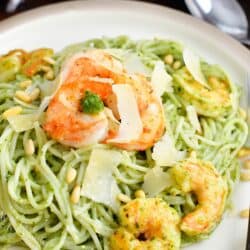
Shrimp Pesto Pasta Recipe
Shrimp pesto pasta is a deliciously light pasta dish packed with fresh and aromatic ingredients like basil and garlic from the homemade basil pesto sauce and sautéed shrimp. As an added touch, it's topped with shaved parmesan and toasted pine nuts. This is a bright and impressive dish and you wouldn't believe how EASY it is to make in 25 minutes.
Servings: 4
Calories: 658kcal
Ingredients
Pesto:
- 2 oz basil
- 2 garlic cloves
- 2 oz Parmesan cheese block, shaved, or shredded
- 3 oz pine nuts
- 1/2 cup olive oil + 2 Tbsp.
- salt to taste
Shrimp:
- 1 lb shrimp
- 2 tbsp canola oil
- 2 garlic cloves
- 2 tbsp grated Parmesan cheese
- salt
- black pepper
Pasta:
- 1 lb pasta any favorite pasta
- 1/2-2/3 cup cooking water
- shaved Parmesan cheese for topping
- pine nuts for topping
Instructions
For Homemade Pesto:
- In a food processor, add about half the oil.
- Add basil, pine nuts, cheese, garlic, and salt to the blender and pour remaining olive oil over the top.
- Pulse several times to begin to blend. Scrape sides of the blender and pulse a few more times. You may need to scrape the sides again and pulse a few more times until all ingredients are well blended.
- Set aside until ready to mic into pasta.
Shrimp and Pasta:
- Cook shrimp while pasta is cooking.
- Cook pasta according to the box instructions and before draining off water, set aside about a cup of cooking water. (Some cooking water will go into pasta and set aside extra just in case you will need to reheat the pasta leftover's later.)
- Toss shrimp in a mixing bowl with salt, pepper, pressed garlic cloves, and grated Parmesan cheese until evenly coated.
- Preheat a large cooking pan over medium-high heat for a few minutes and add oil.
- Sear shrimp for about 2 minutes on each side, until they turn completely opaque. (Exact time will depend on the size of shrimp.) Take the shrimp out of the pan as soon as they are cooked.
- Toss cooked pasta with pesto and about 1/2-2/3 cup of cooking water.
- You can mix the shrimp right into the pasta or simple add it to the top of pasta.
- Garnish with some shaved Parmesan cheese and toasted pine nuts (see notes) and serve!
Video
Notes
- Shrimp doneness cues. Large shrimp usually need about 90–120 seconds per side in a hot pan. They’re done when just opaque throughout with a loose “C” curled shape.
- Storage (cooked pasta + shrimp): Cool quickly and refrigerate in an airtight container for 3–4 days. For best texture, store pesto separately when possible and combine when reheated.
- Reheating: Save some cooking water if you plan to store and reheat the leftovers. Pasta tends to drink the sauce and any liquids it's stored in, so you will need to add some cooking water and a little more pesto when reheating. Reheat over low heat, tossing until loosened and steamy. Make sure to reheat until just warmed or it will overheat.
- Toast pine nuts: for the best flavor, I highly recommend that you toast the pine nuts. Add them to a small dry skillet in one single layer. Turn the heat to medium-low and cook them, tossing from time to time, for 3-5 minutes.
Nutrition
Calories: 658kcal | Carbohydrates: 11g | Protein: 34g | Fat: 55g | Saturated Fat: 8g | Trans Fat: 1g | Cholesterol: 298mg | Sodium: 1744mg | Potassium: 663mg | Fiber: 3g | Sugar: 6g | Vitamin A: 1377IU | Vitamin C: 16mg | Calcium: 410mg | Iron: 6mg